Back to School Rocket Books
A Designer’s First Look: Playful, Purposeful, and Ready for Real Stitching
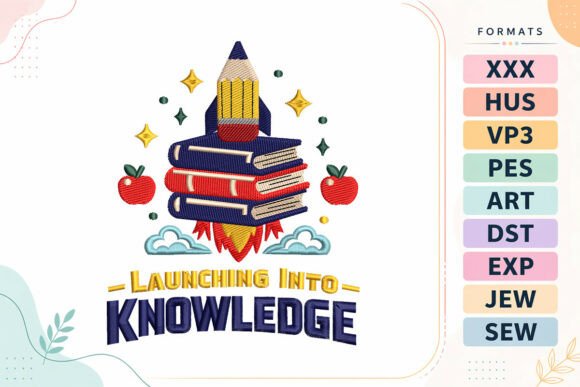
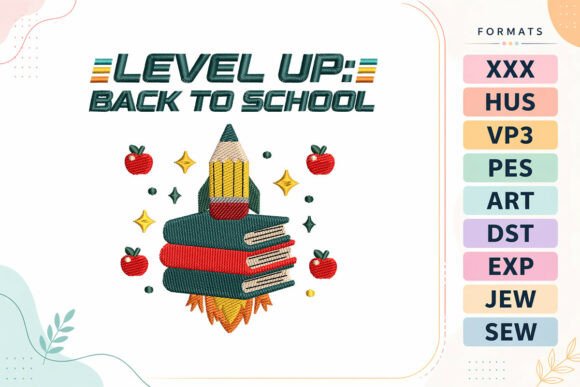
When I opened Back to School Rocket Books for the first time, my eye went straight to the pencil topper—crisp, slightly tilted, full of quiet confidence. That little detail told me this wasn’t just another themed design; it was built with intention. The stacked books-as-rocket motif lands somewhere between clever and comforting: whimsical enough for a kindergarten tote, polished enough for a teacher’s apron or boutique sweatshirt. It doesn’t shout “school!”—it invites curiosity. And in embroidery, where clarity and charm compete for attention, that balance is rare.
How It Lives on Real Projects (Not Just Screens)
Last week, I stitched Back to School Rocket Books onto a natural cotton canvas tote for a local preschool’s welcome kit. The result? Instant recognition and genuine smiles—not just from kids, but from parents scrolling through photos later. Why? Because the shape reads cleanly at 4.5 inches wide: the rocket body has gentle curves, not sharp angles that snag thread; the apples sit just off-center, adding visual rhythm without crowding; and the pencil’s eraser end subtly anchors the composition. It’s got *presence*, even at modest sizes.
I also tested it on a lightweight baby onesie—using a tear-away + cut-away stabilizer combo—and the fill stitches held beautifully across the curved shoulder seam. No puckering. No distortion. That tells me Back to School Rocket Books was digitized with fabric behavior in mind, not just vector perfection. It’s equally at home on a denim jacket pocket (as a subtle embroidered patch), a linen tea towel (where the satin-stitched pencil tip catches light nicely), or a structured cap front (if scaled down thoughtfully).
Where It Shines—and Where to Pause
This design excels in contexts where personality meets practicality: custom apparel for school staff, personalized backpacks for first-day photos, embroidered pillow covers for nursery decor, or small-batch patches sold at craft fairs. Its clean silhouette makes it ideal for printable mockups—whether you’re listing on Etsy or pitching to a boutique buyer, it renders well in both color and grayscale previews.
That said, proceed with care on ultra-thin fabrics like voile or stretchy knits without proper stabilization. The apple stems and pencil graphite lines rely on fine running stitches—lovely on stable cotton or twill, but potentially fragile if overstretched. On dark fabric, test your thread contrast early: the pencil’s yellow barrel and apple reds need breathing room, not visual competition. And avoid cramming it into hoops smaller than 4”x4”—the negative space around the rocket matters as much as the stitch work itself.
Design Notes Every Embroiderer Should Check Before Stitching
- Test on scrap first—especially if using textured fabric like terry cloth or bouclé. Fill stitch density looks generous on screen, but real-world coverage can vary.
- Review thread color choices carefully. The pencil’s metallic silver accent (if included) may require special thread—confirm whether it’s simulated or meant for actual metallic bobbin work.
- Confirm hoop size compatibility before prepping client garments. Some versions may include multiple sizes; others assume standard 5x7. Don’t assume.
- Inspect small details at actual stitch-out size: the apple leaf veins, book spines, and pencil eraser edge all contribute to perceived quality—if they blur or vanish in stitching, adjust density or stabilizer weight.
- Try black-and-white mockups. This design relies on shape and contrast more than color, so if it holds up without hue, it’ll translate across seasonal palettes and branding needs.
- Verify licensing before selling finished items or bundling the digital embroidery file. If you're an Etsy seller or craft business owner, know whether commercial use is permitted—and whether attribution is required.
What It Adds to Your Handmade Product (Beyond the Stitch)
Back to School Rocket Books elevates perceived value without demanding premium pricing. It feels handmade—not mass-produced—because its proportions are human-scaled, not algorithmically optimized. Customers notice that. A parent buying a personalized embroidered lunchbox sees care in the pencil’s angle; a teacher ordering custom sweatshirts senses professionalism in how the rocket sits cleanly above a pocket seam.
It also supports brand consistency. Whether you’re launching a new line of back-to-school nursery decor or refreshing your shop’s holiday gift guide, this design bridges age groups and use cases. It reads as joyful but not childish, academic but not stiff—a quiet strength many embroidery files lack.
Fitting Into Your Workflow—Not Just Your Hoop
If you’re curating digital embroidery files for resale, Back to School Rocket Books is a smart addition: it complements rather than competes with classic apple or chalkboard motifs. As a designer building a cohesive collection, it pairs naturally with simple monogram files or minimalist alphabet sets—no clashing themes, no tonal whiplash.
For craft fair sellers, it’s a conversation starter. I watched a customer pause mid-booth, point to a tote bag with this design, and say, “My daughter *loves* rockets *and* reading—that’s her.” That’s the sweet spot: when a machine embroidery design sparks personal connection, not just aesthetic approval.
Final Thought: A Design That Launches Well
Back to School Rocket Books isn’t flashy—but it’s dependable. It stitches cleanly, scales thoughtfully, and communicates warmth without leaning on cliché. In a season crowded with predictable motifs, it offers something quietly original: intelligence wrapped in playfulness. For anyone creating custom apparel, personalized gifts, or small shop merchandise, it’s less of a “design asset” and more of a reliable collaborator—one that shows up ready to work, not just look good on screen.