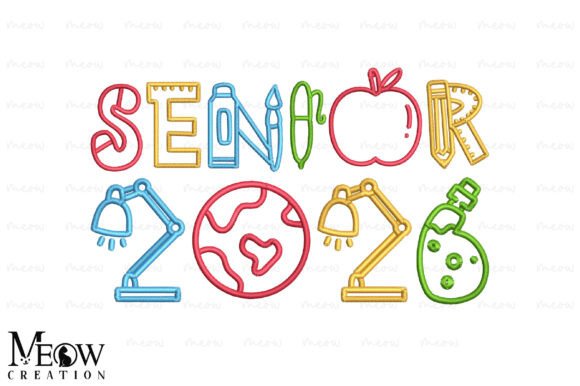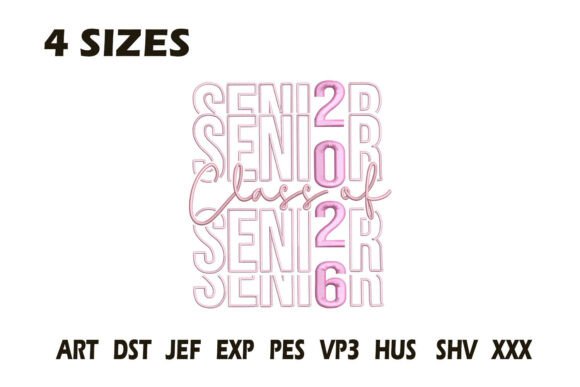
Class of 2026 Senior Embroidery
First Impression at the Embroidery Workstation
When I pulled up the Class of 2026 Senior Embroidery file for the first time, I immediately thought of spring craft fair tables and graduation season booth displays. The description promises a playful, whimsical touch, and that is exactly the kind of aesthetic that stops a customer mid-stride at a handmade market. It is not overly formal or stiff, which means it leans more toward the charming and personal side of the Back To School and senior-year product category. For a machine embroidery design intended to move at a busy weekend fair, that approachable mood is a genuine selling advantage.
What I look for before loading any digital embroidery file onto my machine is whether the visual concept reads clearly in thumbnail form. If a customer cannot grasp the design from three feet away, it will not sell as a finished tote bag or tea towel. The Class of 2026 Senior Embroidery appears built for that quick recognition. The title alone tells me it is meant to celebrate a milestone, and milestone designs consistently perform well for Etsy seller listings and in-person craft fair product displays. There is a built-in emotional hook, and emotional hooks move handmade inventory.
Does the Design Feel Bold, Cute, or Modern?
Based on the description, the design leans toward cute and playful rather than rustic or farmhouse. That is a smart direction for the Back To School category. Seniors and their families are not looking for formal typography. They want something that feels celebratory, personal, and slightly whimsical. The word "charm" in the product description suggests the design includes decorative elements that soften the overall look, which makes it more versatile across fabric types and product categories.
In my experience, designs that mix a fun, whimsical touch with a clear milestone message tend to anchor a booth display beautifully. You can place a Class of 2026 Senior Embroidery tote near the front of the table and it will pull in parents shopping for graduation gifts. The design does not need to be loud to be effective. It needs to feel intentional and finished, and from what I can see, this design has that potential.
How It Photographs for Online Listings
For sellers who split their time between weekend markets and online shops, photography is everything. A machine embroidery design that photographs well on textured fabric, in natural light, and at slight angles will always outperform a design that only looks good flat and straight-on. The Class of 2026 Senior Embroidery design, with its playful description, suggests it will hold visual interest even in a styled flat lay with props like graduation caps, ribbons, or vintage books. When I create a printable mockup or style a finished product for an Etsy thumbnail, I need the stitched design to catch light and show dimension. Whimsical details tend to do exactly that.
Tote Bags and Market Bags
A tote bag design featuring the Class of 2026 Senior Embroidery is the most obvious winning product for a craft fair. Totes are practical, giftable, and offer a generous stitching surface. I would position the design as a centered focal point on a natural canvas tote, using thread colors that contrast well against the fabric. The playful nature of the design works beautifully on a bag that a senior might carry through their last semester or use as a keepsake after graduation. From a production standpoint, tote bags are also easy to batch, which makes them a strong small shop product for sustained inventory.
Apron Embroidery for Gift Buyers
Apron embroidery is another category where this design could shine. Imagine a parent or grandparent purchasing a custom apron with the Class of 2026 Senior Embroidery design as a graduation gift for a student who loves to cook or bake. The whimsical touch keeps it from feeling too serious, and an apron is a high-perceived-value item at a handmade market. I would test the design on a sturdy cotton apron and check how the details hold up against a slightly textured fabric surface. Aprons also photograph well hanging against a rustic booth backdrop, which adds to the visual storytelling of a display.
Tea Towels and Kitchen Linens
Tea towel embroidery is a staple at any maker's booth. A tea towel featuring the Class of 2026 Senior Embroidery design could function as a decorative keepsake rather than a utilitarian item. I have seen customers buy milestone-themed tea towels simply to frame them or hang them in a dorm room. The key is choosing a smooth, high-quality towel that does not distort the stitch work. The design's playful character would suit a crisp white towel with a single accent thread color. For craft fair product displays, tea towels are easy to stack, price accessibly, and package beautifully with a simple ribbon.
Embroidered Patches and Small Accents
An embroidered patch version of the Class of 2026 Senior Embroidery design opens up a completely different product category. Patches can be sewn onto denim jackets, backpacks, or graduation caps. They are lightweight, easy to transport, and require minimal display space. If the design includes small lettering or fine details, I would carefully test the stitch density at patch size. Tiny lettering that looks crisp at four inches may lose clarity at two inches. I always recommend running a reduced-size test stitch before committing to patch production. Patches also make excellent impulse buys at the checkout area of a booth.
Caps and Curved Surfaces
Stitching the Class of 2026 Senior Embroidery design onto caps requires extra attention. Caps present a curved surface that can distort lettering and details if the hoop size and placement are not precise. I would test the design on a structured cap and evaluate whether the playful elements still read clearly when the cap is worn. For senior-year products, caps are a natural fit, but the design must be adapted thoughtfully. If the file includes dense stitch areas, those can pucker on a cap's curved front panel. Using the correct stabilizer and running a slow test stitch is non-negotiable here.
Pillow Covers and Home Decor
Pillow covers are an underrated category for milestone embroidery. A Class of 2026 Senior Embroidery pillow cover could be positioned as a dorm room decoration or a sentimental keepsake for a senior's bedroom. The design's whimsical charm would suit a soft, neutral pillow cover fabric, and the finished product would photograph well in lifestyle mockups. For Etsy seller listings, pillow covers also command a higher price point than tea towels or patches, which makes them worth the production time for a handmade product lineup.
Understanding Stitch Density and Detail Work
Before committing to a full production run, I always check how the stitch density behaves on different fabric types. A design described as playful and whimsical often includes decorative flourishes, small accents, or delicate lettering. Those elements can cause thread buildup if the density is too high, especially on thicker fabrics. I recommend testing the Class of 2026 Senior Embroidery file on a scrap piece of the exact fabric you plan to use for finished products. Watch for puckering around any small lettering or intricate motifs. If the design includes dense fill areas, consider whether a slightly lighter stabilizer or a different thread tension might improve the final result.
Thread Colors and Contrast Choices
Choosing thread colors for a milestone design is part technical decision and part artistic judgment. The Class of 2026 Senior Embroidery design likely works best with thread colors that contrast clearly against the fabric base. Dark fabric requires lighter thread to maintain legibility, while light fabric gives more flexibility. I always test at least two color variations before finalizing a product line. A single design can yield multiple product SKUs simply by changing thread color, which is a budget-friendly way to expand a small shop product range.
Hoop Size, Placement, and Fabric Texture
Every machine embroidery design comes with a recommended hoop size. I cannot confirm the exact hoop size for this file without the included technical specifications, so I strongly advise checking that detail before production. The fabric texture you choose will also affect the outcome. Smooth cotton, linen blends, and canvas are forgiving. Textured towels, fleece, or loosely woven fabrics can cause the design to sink or distort. When planning a craft fair product lineup, I always match the fabric to the design's detail level. A playful design like this one deserves a surface that lets its charm come through clearly.
Stabilizer Selection and Fabric Preparation
The right stabilizer can make or break a production run. For tote bags and aprons, a medium-weight cutaway stabilizer usually provides enough support without adding stiffness. For tea towels, a tear-away stabilizer can work if the design is not overly dense. Patches require a completely different approach, often using a water-soluble topping in addition to a sturdy backing. I recommend preparing a test swatch for each product type you intend to sell. The Class of 2026 Senior Embroidery design may behave differently on a canvas tote than on a lightweight tea towel, and you want to know that before you invest in bulk materials.
Creating a Cohesive Product Story
A single embroidery file can anchor an entire booth when you build a product family around it. For the Class of 2026 Senior Embroidery design, I would create a coordinated display featuring tote bags, tea towels, patches, and one or two pillow covers. Grouping products by design rather than by product type helps customers visualize the design in different contexts. A parent might enter the booth drawn to a tote bag and leave with a tea towel and a patch as well. That is the power of a design that translates well across multiple formats.
Pricing and Perceived Value
Milestone designs carry an emotional value that justifies a slightly higher price point than generic decorative embroidery. A handmade product featuring the Class of 2026 Senior Embroidery design is not just a decorated item. It is a commemorative keepsake. I recommend pricing finished products based on the emotional resonance of the milestone, not just the cost of materials and time. At a craft fair, customers will pay more for something that marks a significant life moment, especially when the design feels personal and charming rather than mass-produced.
Designer Notes for a Smooth Production Workflow
My best advice for any maker preparing the Class of 2026 Senior Embroidery design for a market is to follow a strict pre-production checklist. Test the design on scrap fabric first. Check thread colors against at least two fabric options. Review spacing between lettering elements to ensure nothing merges during stitching. Confirm the hoop size matches your machine's capabilities. Inspect the stitch density in any small detail areas. Use the correct stabilizer for your chosen fabric. Create at least one real finished product mockup and photograph it under natural light. Compare how the design looks on different fabric colors. Finally, confirm commercial embroidery licensing terms before selling finished products, especially if the design assets include any trademarked elements or require specific attribution.
For Etsy seller listings, use printable mockup images that show the design in a lifestyle context. A flat lay of a Class of 2026 Senior Embroidery tote with a graduation cap and a few fresh flowers will almost always outperform a plain product shot. The design's playful, whimsical character should guide your photography style. Keep it bright, warm, and celebratory.
Final Booth Readiness Assessment
After evaluating the Class of 2026 Senior Embroidery design from the perspective of a working embroidery designer who sets up at craft fairs, I can say with confidence that this design has strong selling potential. It fits the Back To School and graduation season perfectly. It reads as charming, approachable, and emotionally resonant. It adapts well to multiple product categories, from tote bag design to apron embroidery to tea towel embroidery and embroidered patch applications. It gives a small shop product lineup a cohesive anchor piece. And it offers the kind of visual appeal that draws customers across a crowded market aisle.
The key to success with this design lies in testing it thoroughly on your chosen fabrics, selecting thread colors that enhance its playful details, and presenting finished products in a way that tells a story. A craft fair product sells when it connects emotionally with a buyer, and the Class of 2026 Senior Embroidery design is built for exactly that. I would confidently place it on my production schedule and give it a prominent spot in my booth display.