Brain Energy Back to School Design Review for Merch
As an embroidery designer who works daily with small business owners, apparel decorators, and Etsy sellers, I’m always looking for machine embroidery designs that go beyond decoration. A design needs to earn its place on a finished product—whether that’s an embroidered patch on a cap, a chest logo on a work shirt, or a subtle accent on a tote bag. The Brain Energy Back to School design caught my attention immediately because of its unique character and obvious potential for branded merchandise. In this review, I’ll share how I evaluate this embroidery file from a commercial perspective, not just as a pretty stitch-out, but as a real asset for custom apparel, promotional products, and brand identity.
First Impressions: A Playful Personality That Reads Like a Brand Mascot
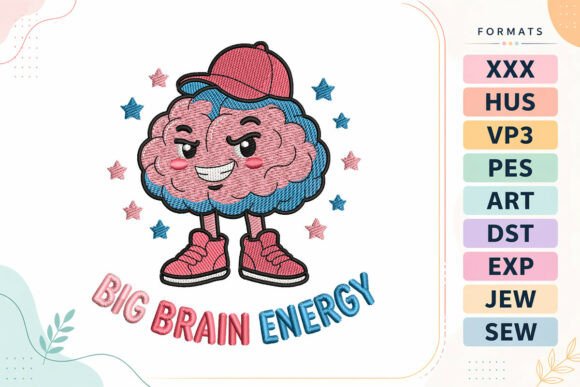
Opening the digital embroidery file, the first thing that stands out is the character’s personality. The kawaii brain with a cap and sneakers, surrounded by playful stars, feels like a ready-made brand mascot. It’s friendly, energetic, and modern without being childish. For a small business—think a neighborhood bakery, a creative studio, a pet brand, or a youth-focused café—this design could become the visual anchor of their merchandise. It doesn’t just say “school”; it says confidence, cleverness, and a little bit of swagger. That’s a rare combination in a back-to-school themed embroidery design, and it’s exactly what makes Brain Energy Back to School stand out from generic clip-art options.
From a design asset perspective, the shapes are bold and the outlines are clean. The character’s cap and sneakers give it an urban, streetwear vibe that would translate beautifully onto a cap embroidery or a hoodie patch. The stars add movement and reinforce the “big brain energy” concept. I can already imagine this on a tote bag design for a tutoring center, or as an embroidered patch on a denim jacket for a handmade brand that sells at craft markets. The visual personality is strong enough to carry a product on its own, which is exactly what you want in a small business merch design.
Where This Design Shines in Small Business Merch
When I evaluate a machine embroidery design for commercial embroidery use, I think beyond the hoop. How will it look on a finished product that a customer actually wears or uses? Brain Energy Back to School performs exceptionally well in several real-world scenarios.
First, as an embroidered patch, this design is a natural. The character’s compact composition and defined edges make it easy to isolate and finish as a standalone patch. A small business could order a batch of these patches and attach them to hats, backpacks, or aprons. For a florist or a boutique, a patch sewn onto a canvas apron instantly adds a signature touch. The design’s playful nature makes it perfect for customer gifts, event merch, or even a limited-edition product drop. I’d test it at a patch size of around 3 to 4 inches wide to retain the detail in the stars and sneakers, but even at 2.5 inches it could still read well if the stitch density is managed.
On cap embroidery, this design offers a lot of promise. The brain character’s vertical orientation and distinct features work well on the front panel of a structured cap. I’d recommend centering it above the brim, where the cap’s curve is minimal, to avoid distortion. The stars could be slightly reduced or repositioned if needed for smaller cap fronts, but overall the composition is cap-friendly. For a coffee shop or a skate shop, a cap with this design on the front and a small brand name on the back closure creates a cohesive, professional look.
For tote bag design and apron embroidery, the design shines as a centerpiece or a corner accent. On a natural canvas tote, the contrast of thread colors against the fabric texture would make the design pop. A bakery could use it on a linen apron, placing the character near the chest or on a pocket. The friendly expression makes it approachable for customer-facing staff, and the cap-and-sneakers outfit gives it a subtle streetwear edge that appeals to a younger demographic. For a handmade brand that sells at markets, this design on a tote bag becomes a walking advertisement.
On custom apparel like work shirts, hoodies, or polo shirts, Brain Energy Back to School works as a left chest logo or a sleeve detail. I’d suggest testing it at a small size for chest placement, around 2.5 to 3 inches wide. The design’s bold outlines help it stay legible even when scaled down, but any tiny stars or fine details need to be reviewed carefully. For a sleeve, the vertical alignment fits nicely, and the design’s energy draws the eye upward, creating a dynamic feel on a garment.
What to Watch Out for in Production
Every design has its sensitivities, and Brain Energy Back to School is no exception. The kawaii style often includes detailed outlines and small elements—like the stars and the sneaker details—that can cause issues if stitch density is too high. On textured fabrics like fleece or heavy canvas, those tight stitches might sink or pucker. I always advise testing on the actual fabric you plan to use, with the correct stabilizer and underlay. A cutaway stabilizer is a safe bet for knits, while a tear-away might work for woven bags if the design is not too dense.
Small patch sizes demand extra attention. When you shrink this design below 2 inches, the stars might blur together, and the character’s facial features could lose definition. I’d avoid using it at that scale for a delicate item like a baby onesie, but for a keychain patch or a zipper pull, it might still work if you simplify the stars. Always run a stitch-out at the intended size and review the thread colors under different lighting. Dark uniforms can swallow certain thread colors, so contrast is critical. If your brand’s uniform is black or navy, consider lightening the design’s background or using brighter thread colors to maintain visibility.
Curved surfaces like cap fronts and bag corners require careful digitizing. The original embroidery file should already account for pull compensation and appropriate stitch angles, but you’ll need to confirm that the design doesn’t pucker or gap when applied to a curved substrate. I always tell business owners to create a printable mockup for client approval before production. That mockup lets you see how the design sits on the product and how it interacts with other design assets like your logo or tagline.
Brand Identity and the Big Brain Energy Effect
Using Brain Energy Back to School on your merchandise isn’t just about adding a cute graphic. It’s about building a brand identity that feels smart, approachable, and memorable. The character acts as a visual shorthand for cleverness and positivity. For a tutoring service, an educational toy brand, or a creative studio, this design instantly communicates the brand’s core values. Customers begin to associate the character with your business, which builds recognition and trust over time.
When this design appears on a staff uniform, it creates a consistent, professional look that still feels warm and human. An apron with this brain character tells customers that your team is both knowledgeable and fun. That’s a powerful combination for a café, a bookstore, or a boutique. In a marketplace crowded with generic logos, a distinctive character like this one can increase product value and make your handmade product stand out on a shelf or at an Etsy shop.
For customer engagement, the design is highly shareable. People love to post photos of unique patches or clever apparel. A cap with this brain character could easily become a conversation starter and a social media asset. The emotional connection that a character creates is something a plain text logo can rarely achieve. That’s why I often recommend designs like Brain Energy Back to School to clients who want to build a loyal following around their brand.
Practical Embroidery Designer Notes for a Smooth Production
Before you commit to a full production run, here are the steps I follow with every commercial embroidery project, and they apply directly to this design.
- Test in black and white first. Stitch out the design using only black thread on white fabric, and vice versa. This reveals any issues with outline thickness, spacing, and overall legibility without the distraction of color.
- Check small patch size performance. If your plan includes patches or small accents, stitch the design at the smallest size you intend to use. Look for lost details in the stars, sneakers, and facial features. Adjust the embroidery file if needed, or choose a larger minimum size.
- Review thread color contrast. The playful stars and the brain’s details need to stand out against the garment fabric. Dark fabrics may require a lighter background fill or a contrasting outline. Test at least three thread color combinations on actual fabric swatches.
- Inspect spacing and pull compensation. Open the digital embroidery file in your software and look for any areas where stitches might overlap or pull too tightly. The character’s cap and sneakers have small sections that could trap stitches; verify that the digitizer has planned for proper underlay and stitch direction.
- Confirm hoop size compatibility. Measure the design’s dimensions and ensure it fits within your embroidery machine’s hoops. If you plan to use a multi-needle machine for caps, check that the design aligns with the cap frame’s sewing field.
- Test on real fabric with the right stabilizer. A canvas tote bag, a cotton apron, a polyester cap, and a knit T-shirt all behave differently. Stitch a sample of each fabric type you’ll use, with the appropriate stabilizer. This is non-negotiable for a professional finished product.
- Create a printable mockup for client approval. Place the stitched design on a digital template of the product. Show it to your client or to your team. This step catches alignment issues and gives everyone a clear vision of the final product before you invest in bulk production.
- Compare beside other design assets. If this design will sit near your brand’s logo or other elements, stitch them together on a sample. Ensure the style, scale, and thread sheen are harmonious. Brain Energy Back to School has a soft, playful aesthetic that might clash with a very formal logo, so test the pairing.
- Confirm commercial licensing. Before using the embroidery file for any business purpose, review the license terms. The product description might not spell out all restrictions, so reach out to the designer if you’re unsure. A commercial license ensures you can legally sell finished products bearing this design without worry.
Final Thoughts for Small Business Owners Ready to Stitch
Brain Energy Back to School is far more than a seasonal school-themed embroidery. It’s a versatile, personality-packed design that can elevate small business merch, unify a brand, and create a memorable customer experience. Whether you’re stitching it on a cap for a pop-up event, adding it to a tote bag for your Etsy shop, or using it as a staff uniform accent, this design brings a fresh, confident energy that resonates with modern audiences.
As with any embroidery file, success lies in the preparation. Test thoroughly, respect the fabric and thread colors, and always produce a sample before the final run. When you treat Brain Energy Back to School as a core design asset and not just a one-off decoration, you’ll unlock its full potential for your brand. I’ve seen even simple character designs become the face of a business, and this brain character has all the qualities—memorable, expressive, and easy to fall in love with—to do exactly that.